What Is a Gunstock Post? History and Modern Applications
A Timber Frame Icon, From Colonial Barns to Modern Homes
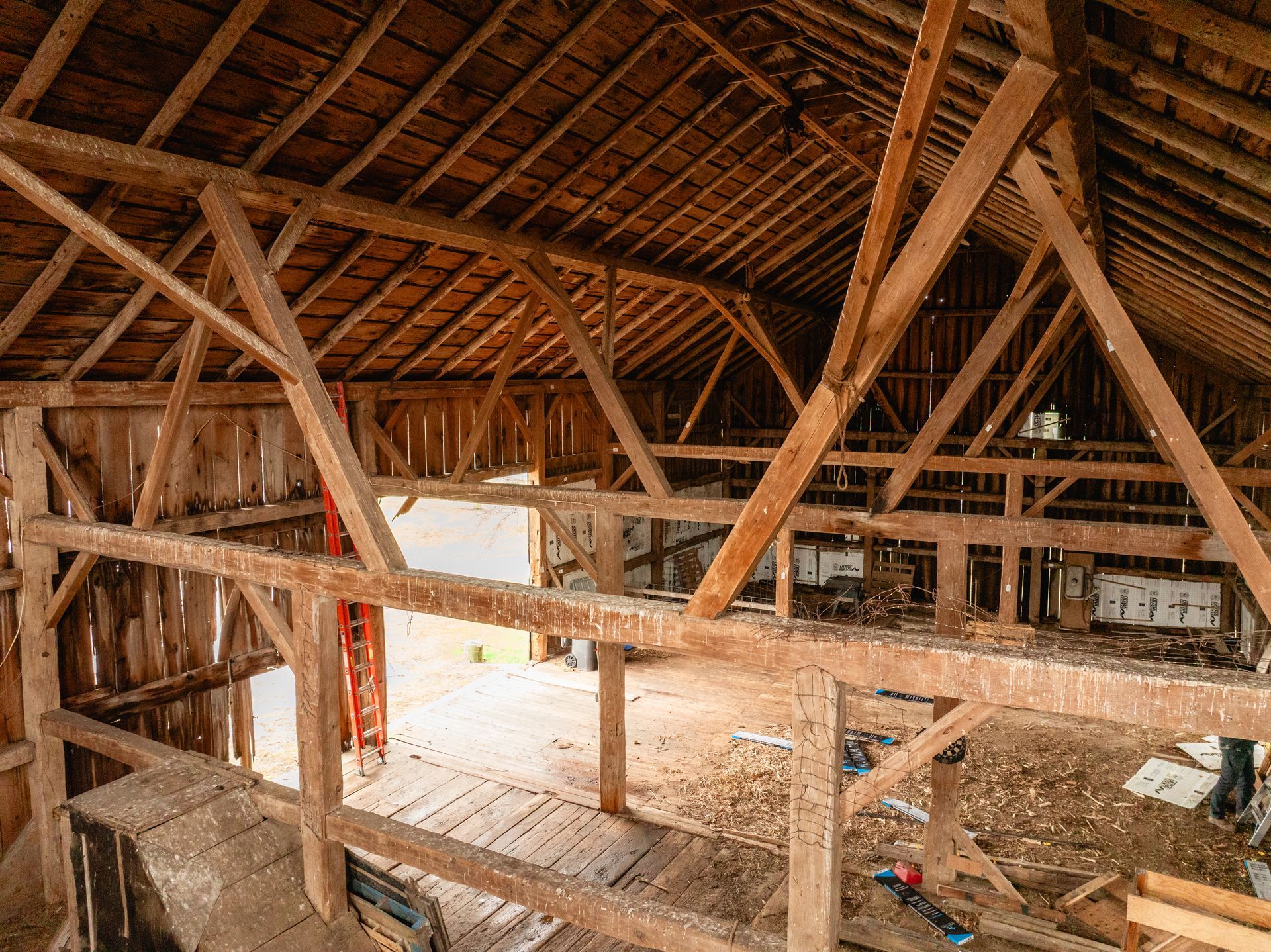
If you've spent any time around old barns or historic timber frame buildings here in Pennsylvania, or really anywhere across the Northeast, you've probably laid eyes on a gunstock post without even knowing it. These tapered beauties are one of the most distinctive and practical features in traditional timber framing. Let's dig into what they are, where they came from, and why they still matter today.
What Is a Gunstock Post?
A gunstock post is a vertical timber structural support that is wider at the top than at the bottom. The flared shape at the top gives it a distinctive silhouette and its name, since that taper is said to resemble the stock of a rifle or musket.
In plain terms: it's a post built to solve a real problem. When you've got a plate, a tie beam, and rafters all wanting to land at the same spot on top of a post, you need more wood up there to cut the necessary joinery without weakening anything. The gunstock post gives you exactly that, extra material right where all those timbers converge.
You'll also hear it called a jowled post or a flared post. In older English timber framing traditions, the term "jowl" referred to the enlarged head of the post, the widened top portion. These are all the same animal. Timber framers tend to use different names depending on where they trained and what tradition they came from.
The History of the Gunstock Post
Medieval Roots
The gunstock post didn't originate in Pennsylvania or even in America. Its roots go back to medieval Europe, where timber framing was the dominant way to build anything worth building, such as churches, market halls, and manor homes. European craftsmen figured out early on that if you want multiple heavy beams intersecting at the top of a post, you'd better have enough wood there to support all that joinery.
The traditional method was surprisingly clever: builders would take a whole tree and flip it upside down so the natural flare of the trunk base was at the top of the post. That gave them the widened shape without having to do extra cutting; nature did the work. These were sometimes called "jowled posts" in the English tradition, and the technique spread widely throughout Europe before the first colonists ever set foot in North America.
Colonial America
When English settlers arrived in the 1600s, they brought their timber framing knowledge with them. Timber framing became the foundational building method across the American colonies from that period all the way through the mid-1800s. The gunstock post traveled right along with it.
You can still walk into homes from the 1690s in Massachusetts, and old barns throughout Pennsylvania, and find gunstock posts holding things up after three centuries. Considering these structures have endured generations of harsh winters, heavy snow loads, and the occasional shifting foundation, that's a testament to the ingenuity of the original design.
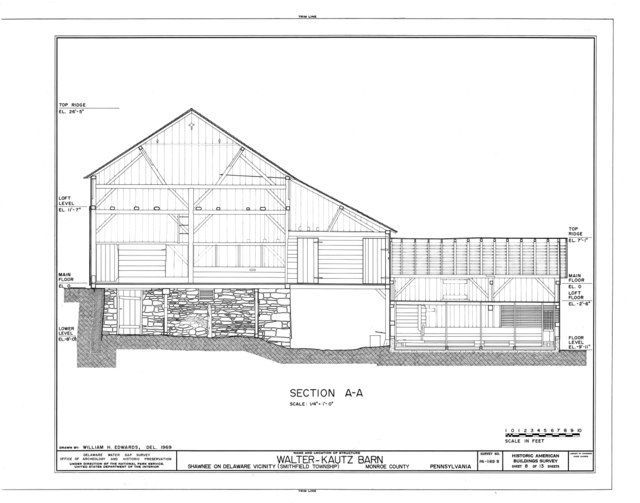
In Pennsylvania, especially, the German and English settlers brought strong timber framing traditions that shaped the agricultural buildings across our landscape. Many of the old bank barns and farmstead structures that still dot our hills were built with exactly these principles, posts shaped to carry maximum load at the joint, with joinery cut tight enough to last generations.
The English Tying Joint
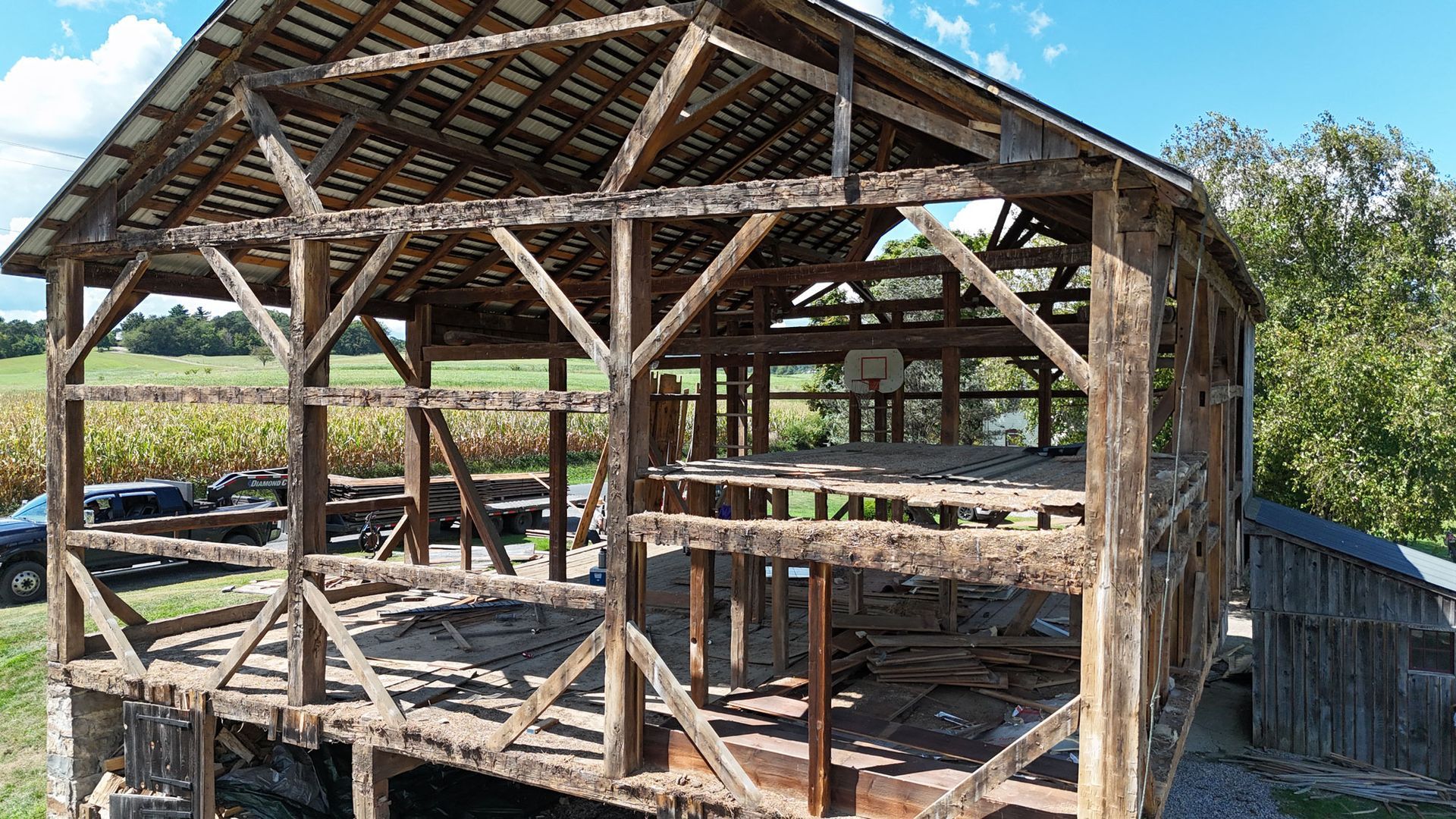
One of the signature uses of a gunstock post in early American and English timber framing was as part of what's called the English tying joint, a classic connection that brings together the wall plate and the tie beam at the top of the post in one spot. The flared top of a gunstock post makes this joint possible without sacrificing structural integrity.
At the very tip of the post, you'll typically find what's called a teasel tenon, a protruding tenon that fits into the mortise cut into the underside of the tie beam. This is elegant engineering, and it's been doing its job for centuries.
How a Gunstock Post Is Made
Traditional Method
Historically, craftsmen worked from whole logs, choosing trees with a natural root flare and inverting them so that the flare became the top of the post. This took experience and a good eye for selecting the right timber in the forest. Nothing was wasted, and the natural grain of the wood running through that flare actually made for a stronger joint.
Modern Method
Today, gunstock posts are typically sawn from large-diameter logs; white pine, white oak, and Douglas fir are common choices depending on the region and the structural requirements. A craftsman will lay out the post at a standard dimension, say 8x8 inches, along the length of the shaft, then open it up to a wider dimension (often 8x12 or larger) in the upper portion where the joinery will be cut.
The transition between the narrower shaft and the wider head is usually made with a gradual shoulder cut, giving the post its characteristic tapered profile. Done well, a gunstock post is both structurally sound and visually striking, one of those details that makes timber frame construction so rewarding to work with.
Structural Function: Why the Shape Matters
Here's the practical reality: in traditional timber framing, the top of a wall post is one of the busiest spots in the whole frame. You've often got:
- The wall plate (the horizontal timber running along the top of the wall)
- The tie beam (the horizontal beam connecting opposite walls, often bearing roof loads)
- Sometimes knee braces or rafters also land in the same general area
If you try to cut mortises for all of those into a post that's the same width top to bottom, you end up removing so much wood that the post is significantly weakened right where you need it strongest. The gunstock post solves this by providing more material at the top, giving the craftsman enough wood to cut clean, tight-fitting joints without compromising the structural integrity of the post itself.
It's the kind of solution that makes complete sense once you understand the problem. And it's one of the reasons traditional timber frames have outlasted so many other building systems by centuries.
Modern Applications of the Gunstock Post
You might think that a post type with medieval roots would have faded out alongside horse-drawn plows and open-fire cooking. But the gunstock post is alive and well in modern construction, for very good reasons.
Timber Frame and Post-and-Beam Homes
The revival of timber framing that began in the 1970s brought the gunstock post back into regular use. Homeowners and builders who value exposed timber framing recognize that gunstock posts serve the same structural function they always have, and they add a visual depth and historical character that no engineered lumber product can replicate.
In a custom timber frame home today, gunstock posts are often featured prominently at the corners of great rooms, in open barn-style kitchens, and at the entry bents of the structure. They become a focal point, a visible reminder of the craftsmanship that went into the building.
Historic Barn and Building Restoration
This is where gunstock posts really shine in the modern era. When restoring a historic timber frame structure, a 200-year-old Pennsylvania barn, for example, you're often working to preserve or replace original gunstock posts that were part of the original design. Matching the dimensions, the wood species, and the joinery details requires real expertise and a deep respect for traditional methods.
Any time you pull apart an old frame and find those flared posts, you know you're dealing with a serious piece of history.
Architectural Salvage and Reclaimed Frames
Gunstock posts from antique frames are also prized in the architectural salvage market. When an old barn is carefully dismantled rather than demolished, those posts can be preserved and reused, either in a new timber frame home or as decorative structural elements. The aged patina, the hand-hewn marks, the centuries of weathering, none of that can be manufactured. It has to be earned over time.
Preserving Gunstock Posts: What to Watch For
If you've got an old timber frame building with original gunstock posts, there are a few things worth paying attention to:
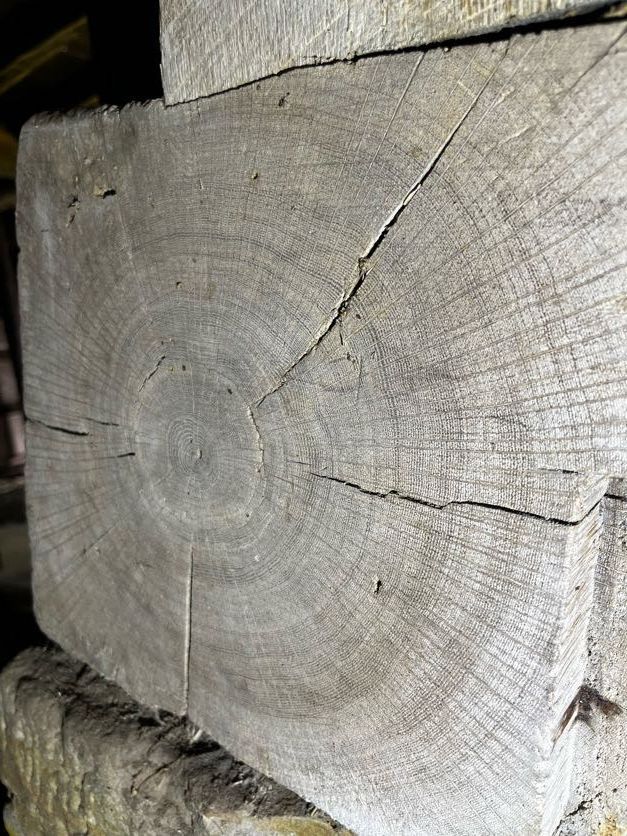
- Checking: Almost all old timbers will develop surface cracks as they dry over time. This is completely normal and expected in timber framing. Checking doesn't typically affect structural integrity, but deep checking at joinery locations deserves a closer look.
- Joinery looseness: Over centuries, mortise and tenon joints can work loose as wood shrinks and settles. A gunstock post with loose joinery at the plate or tie beam connection may need re-pegging or shimming.
- Wood deterioration at the base: The bottom of any post is more vulnerable to moisture damage than the top. If you're seeing deterioration, it's usually at the base, not the flared head. A damaged post base can often be sistered or spliced by an experienced craftsman without replacing the entire post.
Bay & Bent: Pennsylvania's Heritage Timber Frame Specialists
Here in Pennsylvania, we've spent years working with historic timber frame structures, dismantling them with care, cataloging every timber, and re-erecting them as beautiful, functional homes and event spaces. Gunstock posts are part of that story every single time we work with an antique frame.
Bay & Bent specializes in the conversion of historic, antique timber frame structures into remarkable homes and event venues. Our team understands these frames from the inside out, not just the structural engineering, but the history and craftsmanship embedded in every timber. When we encounter original gunstock posts in a frame we're working with, we treat them as what they are: irreplaceable artifacts of American building heritage.
If you're looking to restore an existing historic barn, re-erect an antique frame on a new site, or simply learn more about what makes these old buildings so enduring, Bay & Bent is the team to call. We bring the kind of hands-on expertise that only comes from years of working directly with these structures, not just reading about them.
Frequently Asked Questions (FAQs)
What's the difference between a gunstock post and a jowled post?
They're the same thing, just different names. "Jowled" is the older English term referring to the enlarged head of the post, while "gunstock" describes the shape, wider at the top, narrower at the base, like a rifle stock. Both terms are widely used in the timber framing community.
Are gunstock posts still used in new construction?
Yes. Timber frame home builders use gunstock posts in new construction wherever the structural situation calls for one, particularly where wall plates, tie beams, and rafters all intersect at the top of a post. They're also used for their visual impact in exposed timber interiors.
How do I know if my old barn has gunstock posts?
Look at the vertical posts and check whether they're wider at the top than at the bottom. The transition can be subtle or quite pronounced, depending on the original builder and the era of construction. If you're unsure, someone with hands-on timber framing experience can identify them quickly.
What wood species are gunstock posts typically made from?
Historically, Eastern white pine and white oak were common in the Northeast and Mid-Atlantic. Chestnut was also used before the blight wiped it out in the early 20th century. Today, white pine, Douglas fir, and white oak remain popular choices for both new and restoration work.
Can a damaged gunstock post be repaired rather than replaced?
Often, yes. Depending on the location and extent of the damage, an experienced craftsman can splice, sister, or reinforce a compromised post. Replacement is sometimes necessary, but a skilled restorer will always look for a way to preserve original material when possible.
Final Thoughts
The gunstock post is one of those details that tells you a lot about the people who built these structures. They weren't just slapping boards together; they were thinking through every joint, anticipating every load path, and choosing solutions that would hold up long after they were gone. Three hundred years later, those posts are still doing exactly what they were designed to do.
That's the kind of craftsmanship worth understanding, preserving, and building on. Whether you're restoring an old frame or building something new with traditional joinery, the gunstock post deserves a place in your vocabulary, and probably in your structure.