Essential Timber Frame Tools Used in Historic Barn Restoration
The hand tools that shaped every joint in a barn's frame.
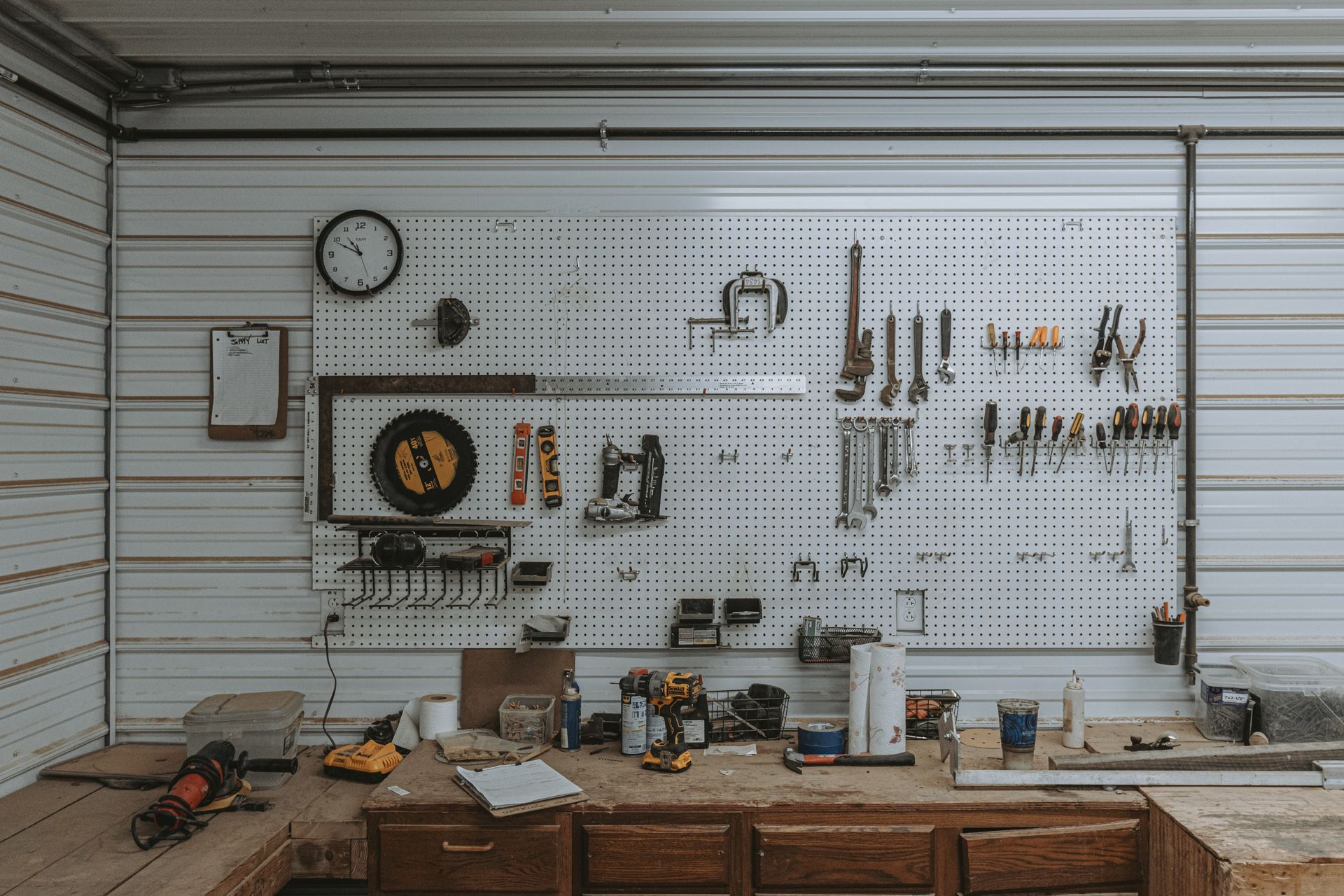
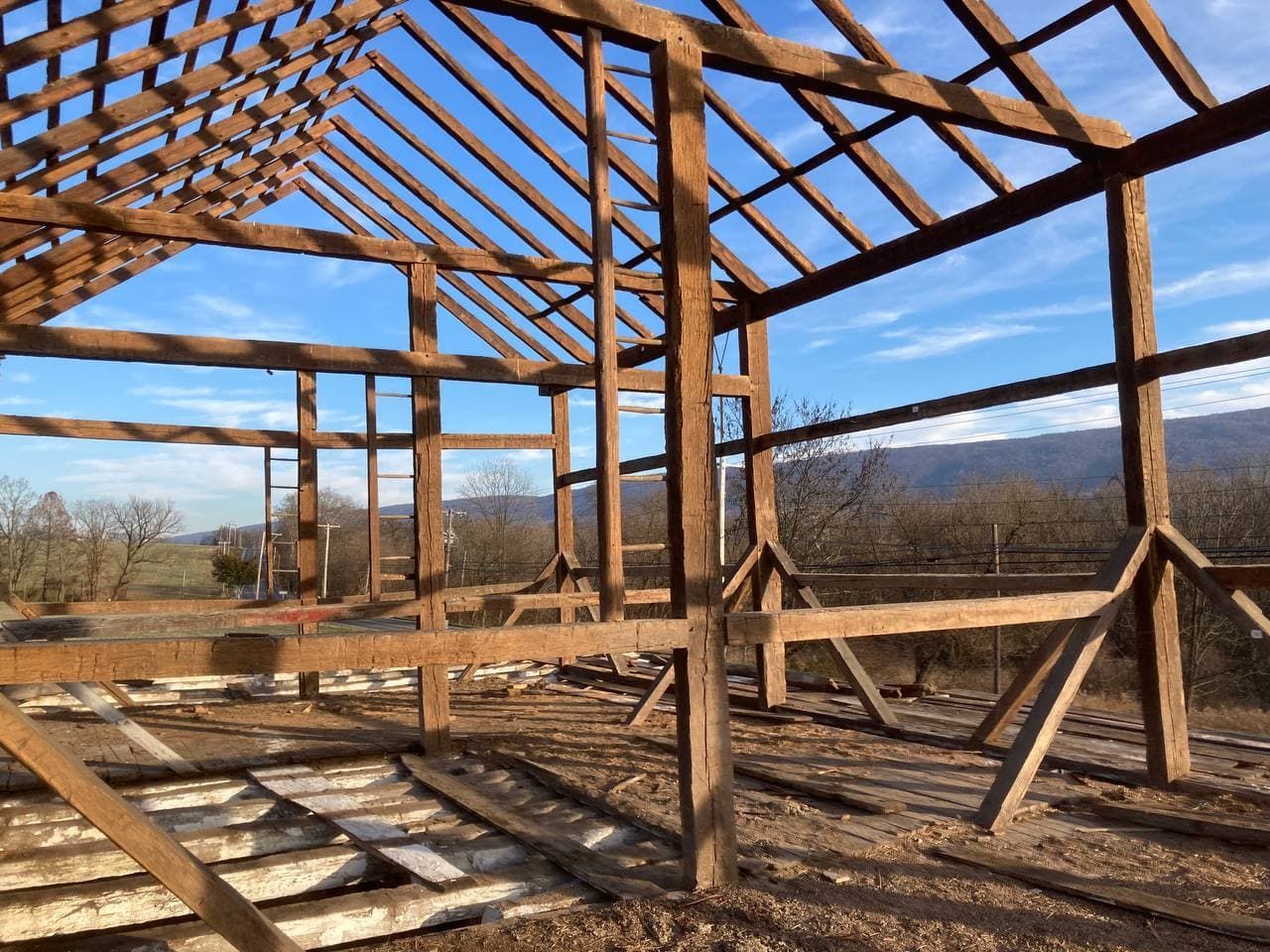
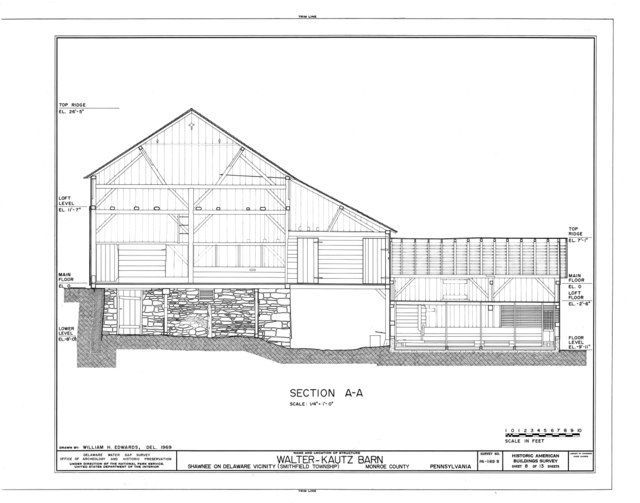
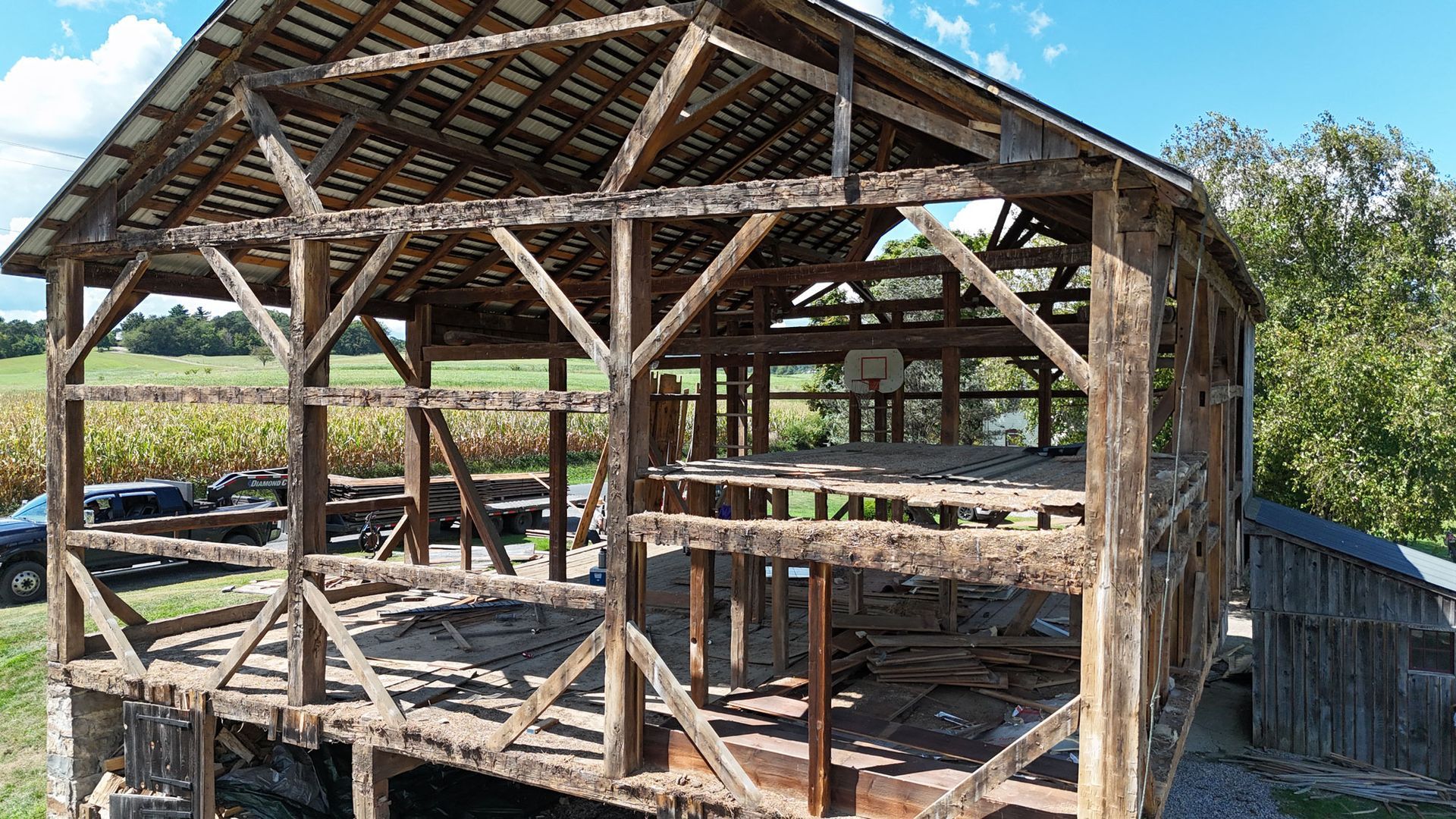
Walk into an old Pennsylvania bank barn and look up. Those massive hand-hewn beams overhead didn't shape themselves. Every flat face, every joint, every peg hole is the result of a craftsman who knew his tools and knew how to use them.
At Bay & Bent, we work with historic timber frames every day. We dismantle them, restore them in our Pennsylvania workshop, and prepare them for a new life. Through that work, we've learned that the timber frame tools used to build these structures matter just as much as the wood itself.
Here's a rundown of the essential tools that go into honest barn restoration.
Layout and Marking Tools
Before anything gets cut, you need to know exactly where everything goes. Layout errors in timber framing aren't small problems; a joint that doesn't fit can compromise an entire bent.
- Framing square. The cornerstone of timber frame layout. This L-shaped steel tool is used to square lines across a beam, mark mortise locations, and check that cuts are true. The 1½-inch and 2-inch widths of the tongue and blade aren't accidental; they match common tenon widths in traditional framing.
- Chalk line. A fast, accurate way to snap a straight reference line down the length of a timber for rip cuts and layout. Historically, craftsmen used ink and charcoal. Same idea, different medium.
- Plumb bob. A weighted bob on a string remains one of the most reliable ways to check vertical alignment, especially during reassembly, when every post needs to go back in the right place.
Hewing and Shaping Tools
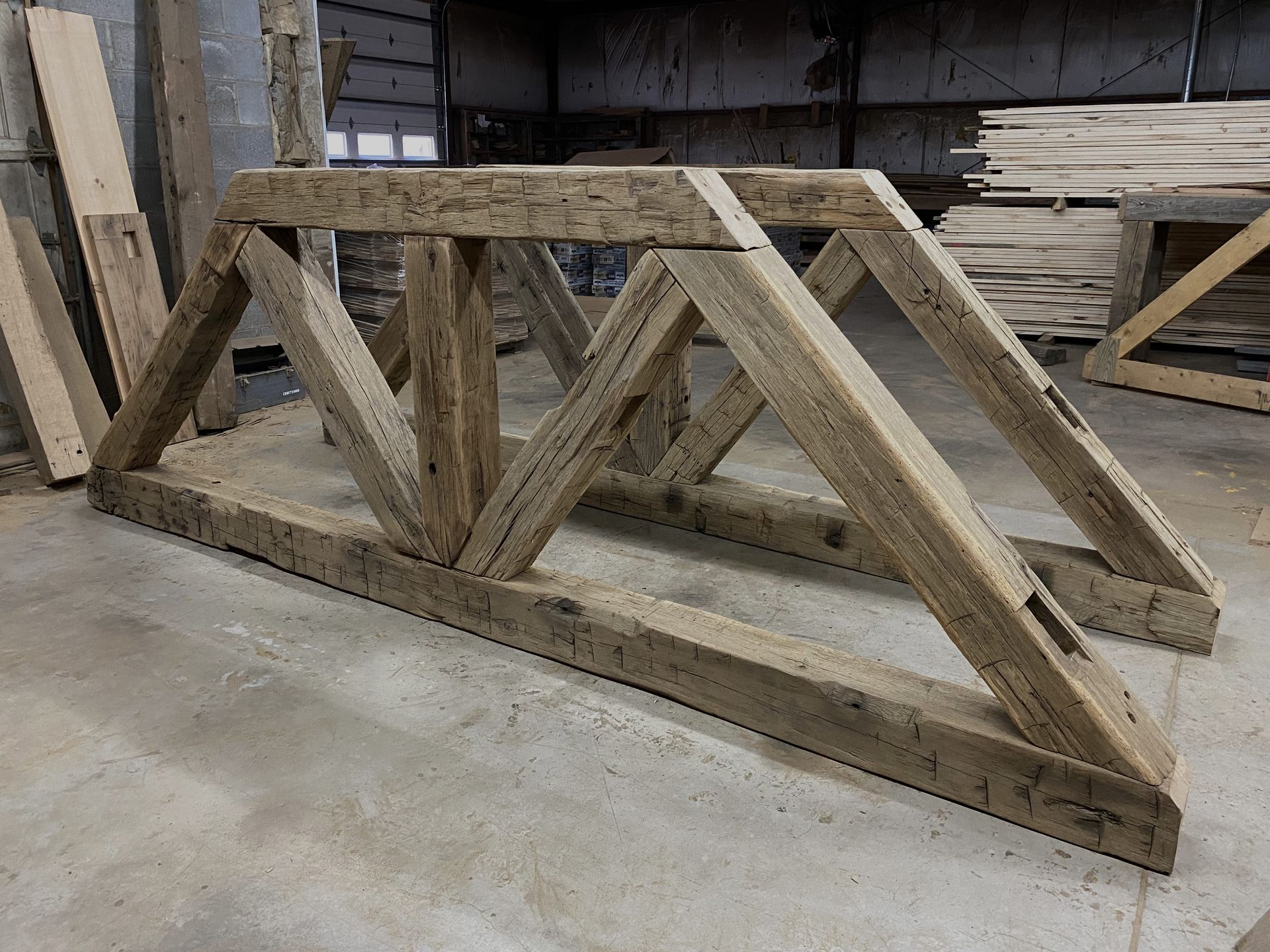
Historic barn timbers weren't milled. They were shaped by hand from logs, with the marks still visible in the wood. When we fit replacement timber, we work to match that original surface character.
- Broadax. A wide, flat-headed ax with a short handle, used to hew the face of a log flat. The builder would score the log first with a felling ax, then swing the broadax along the grain to knock off the waste. Those characteristic flat facets on old barn timbers came from a broadax. We preserve those marks whenever possible; they're part of what makes a historic frame authentic.
- Adze. A curved blade mounted perpendicular to the handle, swung down along a timber's surface to smooth and shape it. By the 18th century, barn builders typically used the adze to square timber sides after rough hewing. Today we use it to match hand-hewn texture on replacement sections.
- Drawknife. A flat blade with handles on each end, pulled toward you to shave thin layers off a timber. It's excellent for chamfering beam edges and shaping the wooden pegs, called treenails or trunnels, that lock every joint in a historic frame.
Joinery and Cutting Tools
The joint is the heart of a timber frame. No nails, no screws, wood fitted into wood, locked with a wooden peg. Every joint in a historic barn was cut by hand, and restoring them requires the same tools and the same care.
- Mortise and tenon joints are the foundation. The mortise is a rectangular slot cut into one timber; the tenon is a shaped tongue on another. A hardwood peg driven through both locks the connection, and as the wood dries over time, that joint gets tighter. Different joint types handled different structural needs: dovetails resisted pulling apart, scarf joints connected timbers end-to-end, and housed joints let one beam sit within another.
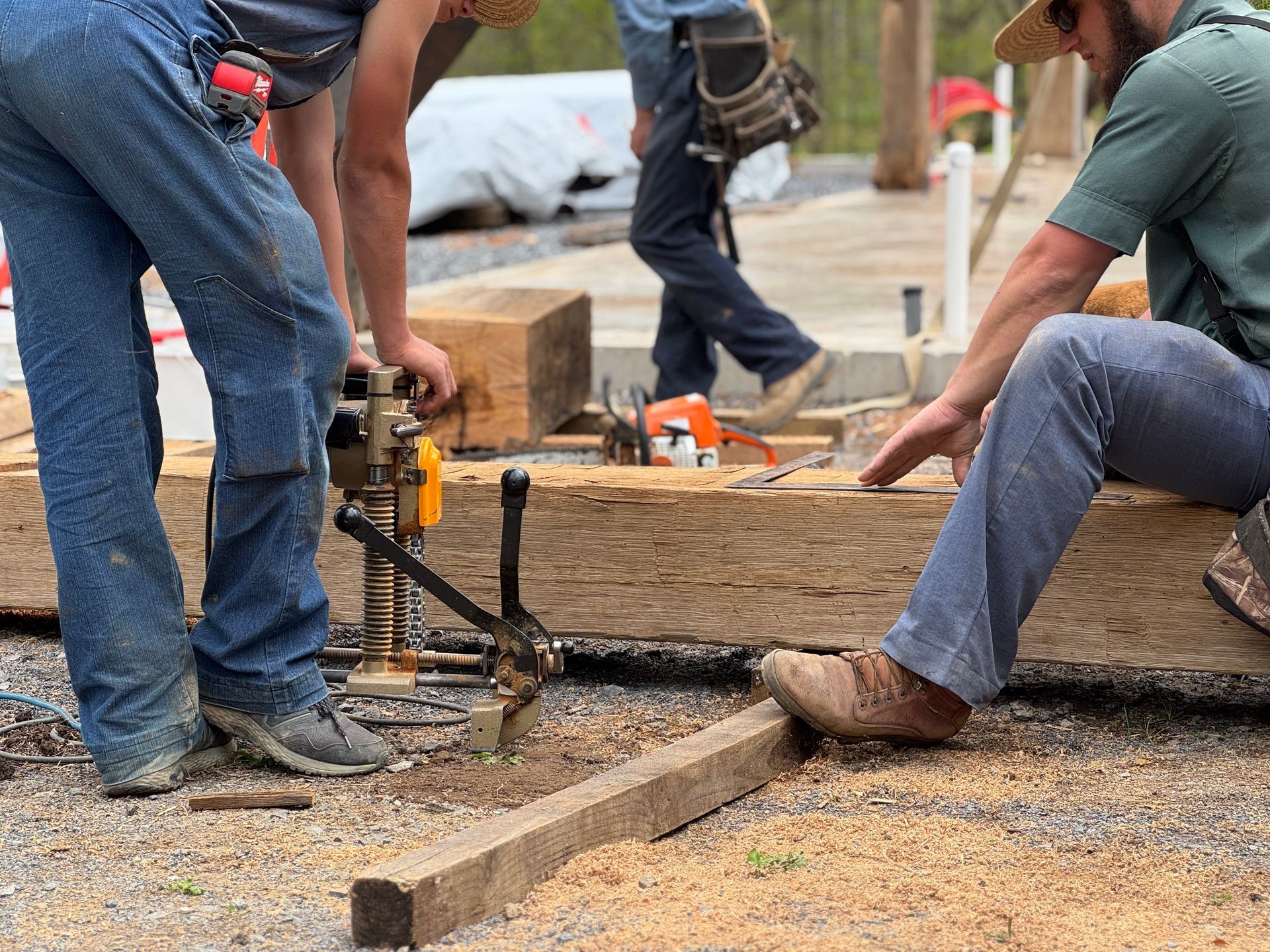
- Framing chisels. Heavy-duty chisels, typically 1½ to 2 inches wide, are driven with a mallet to chop mortises, clean up tenon shoulders, and pare joints to a tight fit. A good framing chisel is 14–16 inches long with a socket handle that can take hard use. We spend a lot of time at the chisel on any restoration job.
- Slick. A very large chisel, too large for a mallet. You lean into it with your body weight to shave a tenon face or flatten a scarf joint table. A slick in good hands leaves a clean, precise surface straight off the tool. When we're fitting replacement tenons to original mortises, the slick is one of the first things we reach for.
- Auger and boring machine. Drilling peg holes and removing mortise waste requires an auger bit. Historically, T-augers were turned by hand; by 1830, hand-cranked boring machines made the work faster. We use electric drills with ship's auger bits today, but the principle hasn't changed. The hole has to be true, or the peg won't drive without splitting the wood.
- Wooden pegs (treenails). Typically white oak, hand-shaped into octagonal profiles with a drawknife. The peg hole is slightly offset between the two pieces, a technique called draw-boring, so the peg pulls the joint tight as it's driven in. When we restore a frame, we replace damaged pegs with new ones cut to match the originals. Metal fasteners don't belong in a mortise-and-tenon joint. Wood moves seasonally, and a peg moves with it. A bolt doesn't.
Where Bay & Bent Comes In
At Bay & Bent, we've built our entire operation around these principles. We travel the country to find historic frames worth saving, carefully document and dismantle them, and bring them back to our Pennsylvania facility for restoration. That means period-correct wood, traditional joinery methods, and the timber frame tools described in this article, used as working tools, not museum pieces.
Once restored, we deliver the frame and support reassembly anywhere in the country. The result is a building that carries real history into its next chapter, whether that's a custom home, a commercial space, or a wedding venue.
If you're working on a barn restoration or looking to incorporate a historic frame into a new build, we'd be glad to talk.
Frequently Asked Questions (FAQs)
Can modern power tools be used in restoration?
Yes, for rough cuts and drilling. But fitting joinery still happens with hand tools, because accuracy matters more than speed.
What wood were Pennsylvania barn frames built from?
Mostly white oak and American chestnut for structural timbers, with eastern white pine for secondary framing. Old-growth stock of these species is denser and more rot-resistant than anything available new.
Why wooden pegs instead of bolts?
A white oak peg moves with the wood through seasonal humidity changes. A metal bolt holds the joint rigid, which stresses the surrounding wood over time. In a draw-bored joint, the peg actually gets tighter as the frame dries, exactly what you want.