Girder Truss vs. Common Truss: Understanding Historic Barn Structure
Not all trusses are built the same
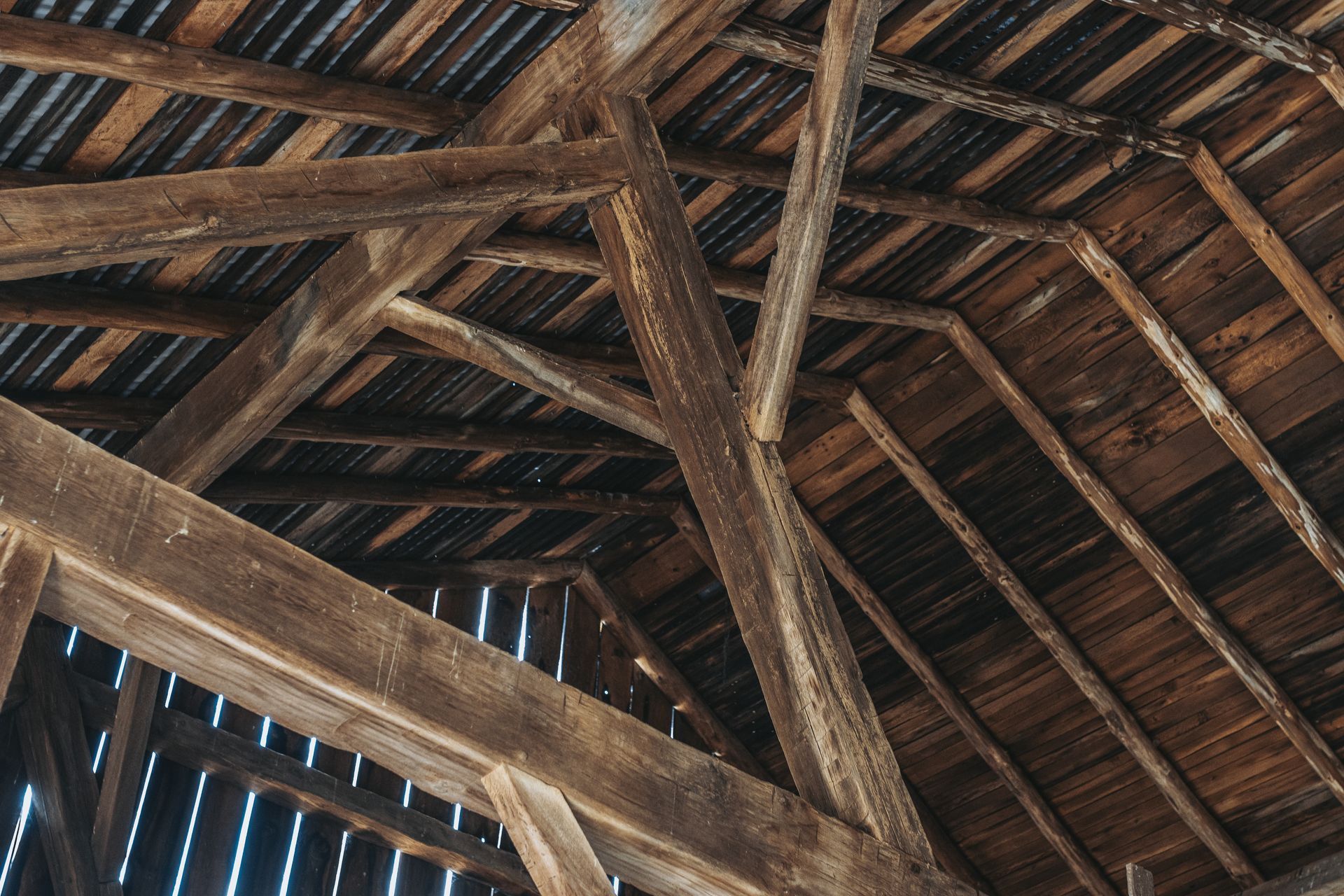
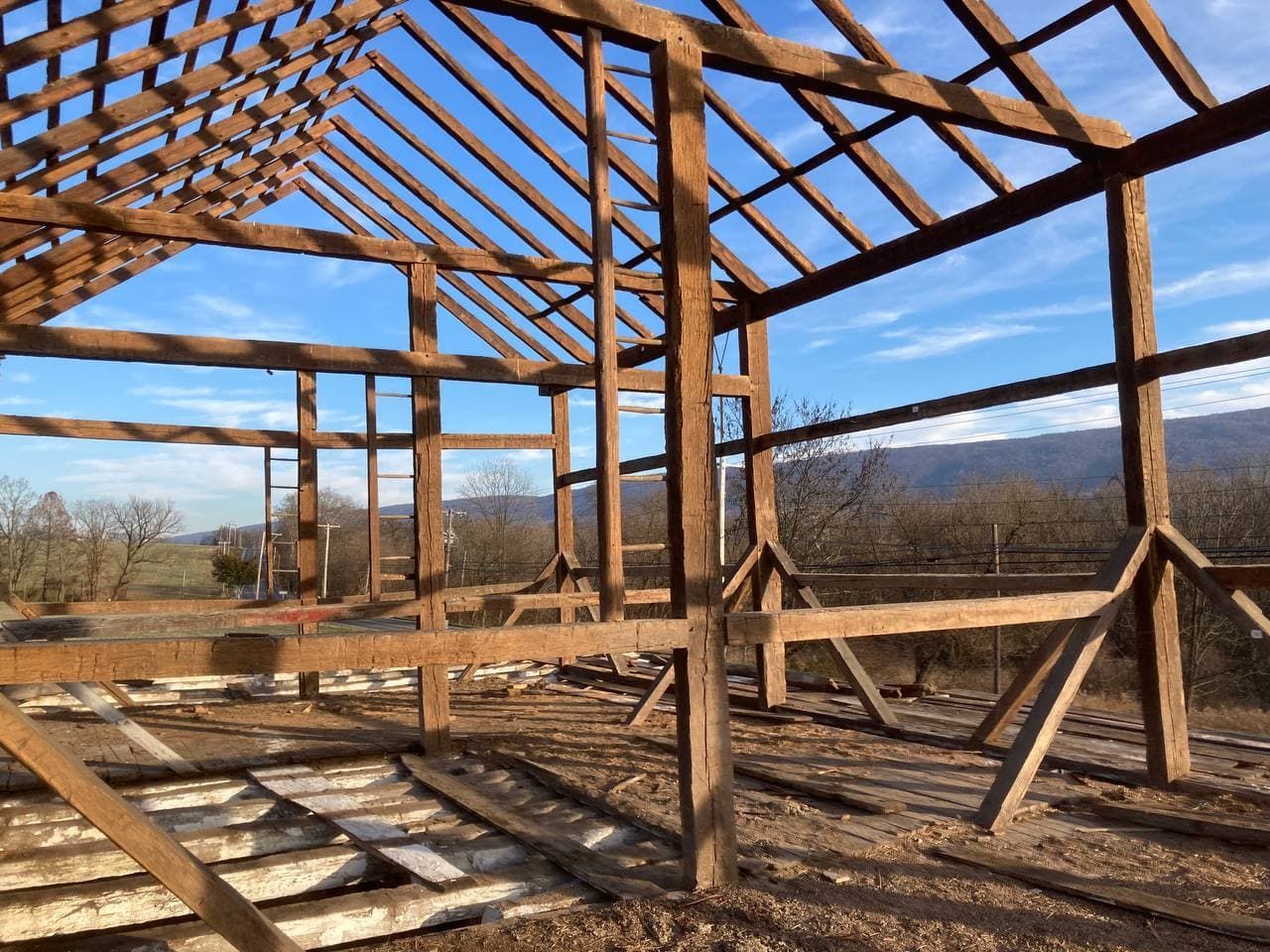
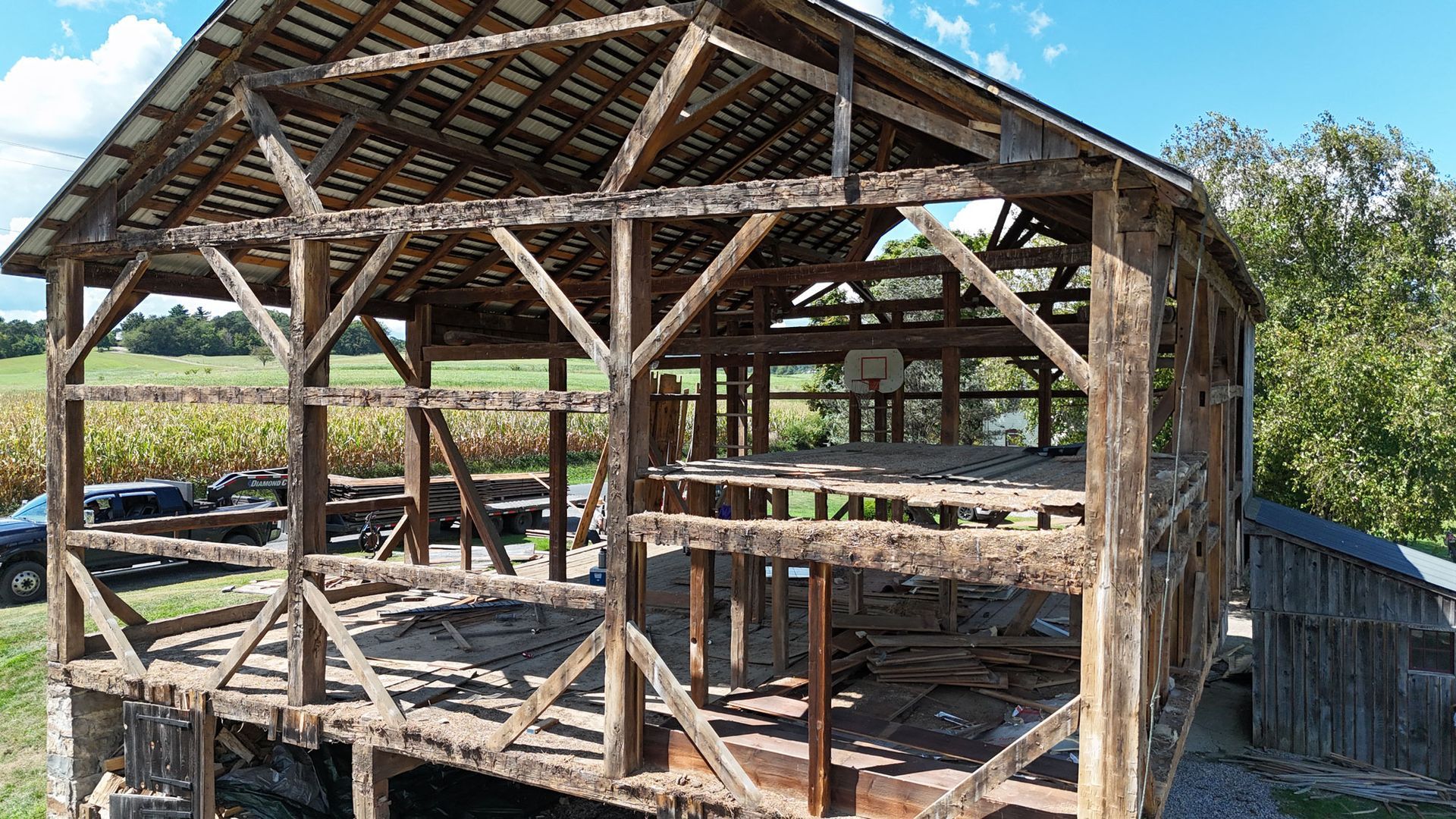
When you walk into an old Pennsylvania bank barn and look up, you're not just seeing wood. You're reading a century of decisions: how wide the builder needed to span, how much weight those timbers had to carry, and what framing style the local craftsmen knew best. Two of the most important players in that story are the girder truss and the common truss.
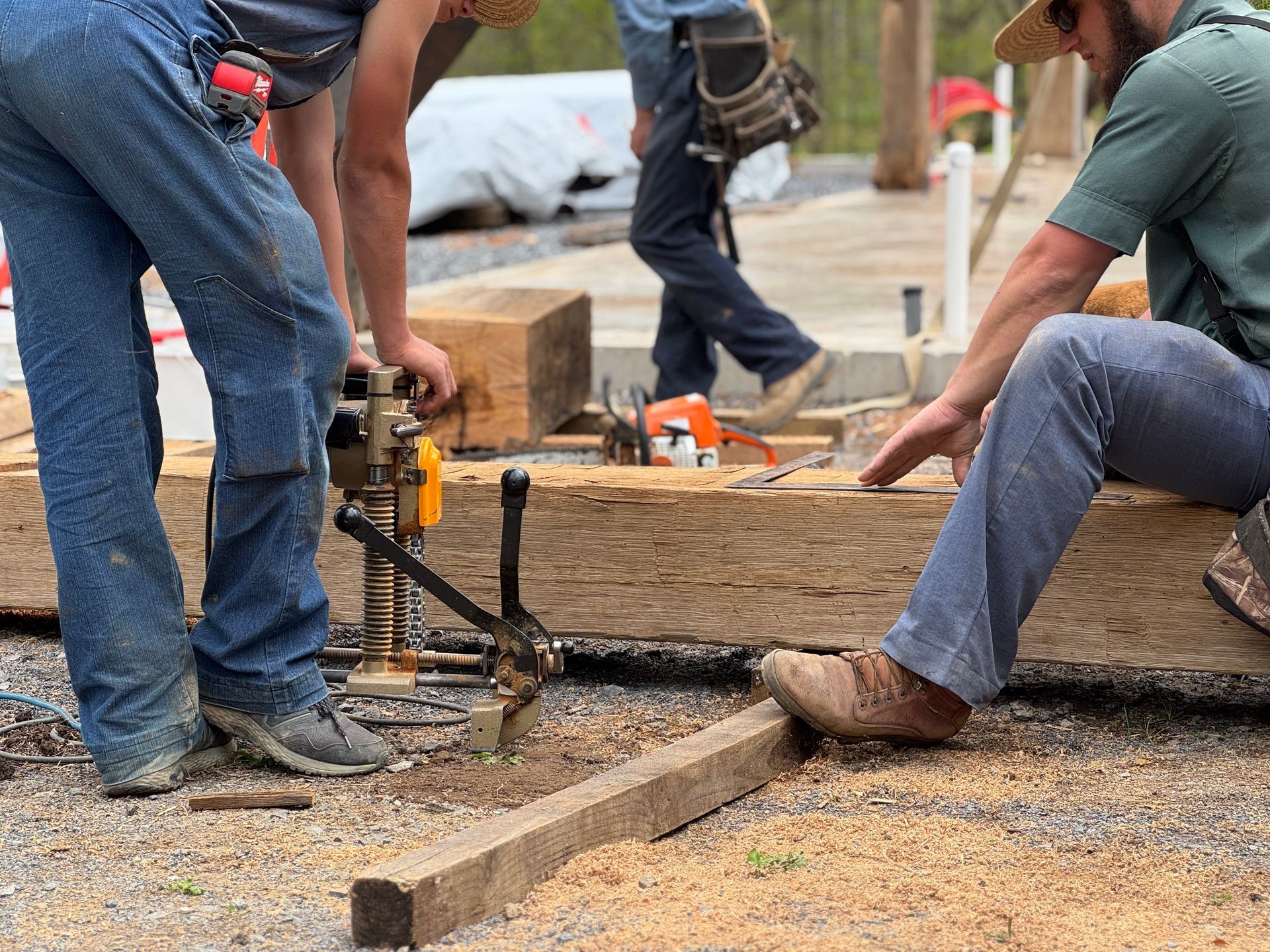
We dismantle them, document them, and give them second lives in homes, event venues, and commercial spaces. When people ask what the difference is and why it matters, here's what we tell them.
What Is a Common Truss?
The common truss is exactly what the name suggests: the most familiar truss configuration in historic timber frames. It's built around a basic triangular shape, two rafters meeting at a peak, held together by a horizontal tie beam at the base.
That triangle is the whole point. Triangles don't rack or distort under load. The rafters push out at the bottom, and the tie beam holds them in check. The result is a self-contained structural unit that repeats from bay to bay along the length of a barn.
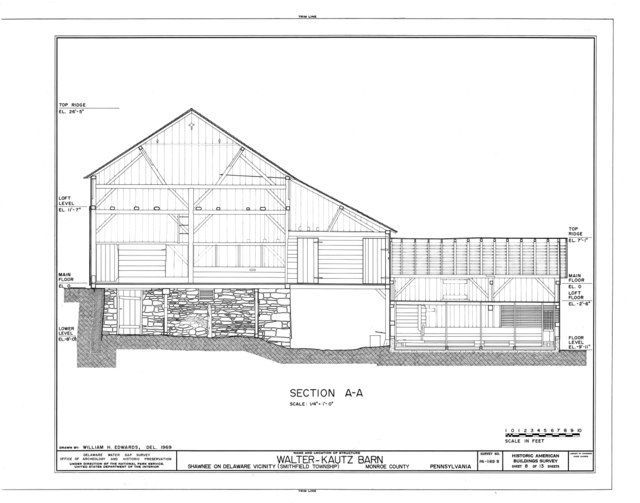
In Pennsylvania barn history, the common truss showed up early and stuck around. Historians have traced how the canted queen-post triangular truss, a direct descendant of the common truss family, became a simple yet profoundly successful roof frame that spread westward from Pennsylvania's agricultural heartland during the 19th century. You see variations of it in virtually every old bank barn we take apart in this region.
Common trusses are lean by design. Farmers and barn builders valued the simplicity. You didn't need a lot of material, and you didn't need a lot of time. You could raise a common truss frame in a day with enough hands.
What Is a Girder Truss?
A girder truss is a different animal. It's not just any truss; it's a truss built specifically to carry other trusses. Think of it as the main structural spine of a timber frame, running perpendicular to the common trusses and holding them up.
A girder truss is designed to carry a higher load than other trusses in the same construction. It features additional posts and structural members beyond what a standard truss of the same span would require, all for greater strength against bending and shear.
Where a common truss handles its own bay, a girder truss handles a wider structural load across multiple bays. Girder trusses range from 1–5 plies in thickness, with the additional plies lending extra strength and material for connecting fasteners. When you see massive doubled or tripled timbers running across the span, timbers that make everything else look modest, you're likely looking at a girder truss.
Girder trusses have a long, straight design, with a top chord and a bottom chord separated by diagonal and vertical webs. The top chord is always in compression; the bottom chord is always in tension.
How They Work Together
In a well-built old barn, common trusses and girder trusses don't compete; they work as a team.
Common trusses repeat down the length of the barn, one per bay, carrying the roof load down to the walls. The girder truss runs across them, collecting loads where bays change direction, where structural conditions shift, or where a builder needed a wider open span without extra posts.
You start pulling timbers, and you can see exactly how the original builder was thinking, where they trusted the common truss, and where they needed heavier framing.
Why It Matters for Reclaimed Timber Work
Understanding this difference has real, practical consequences when working with reclaimed barn frames.
- Structural capacity. A girder truss timber has carried more load for longer than a standard common truss rafter. When we evaluate a frame for resale or reuse, we assess every timber for integrity, checking for splits, insect damage, and compression failure. Girder truss timbers get extra scrutiny because they do heavier work.
- Reuse potential. The heavy members pulled from a girder truss position, large-dimension beams, doubled posts, and wide-span tie beams are some of the most desirable pieces in a reclaimed frame. Buyers use them for ridge beams, carrying beams in new homes, exposed ceiling beams in commercial spaces, and event barn construction.
- Identification during dismantling. Knowing which timbers came from girder positions tells you what you're getting, not just a big beam, but a piece engineered to hold a building together under real agricultural loads for generations.
Pennsylvania's Barn Heritage
Pennsylvania has some of the richest agricultural building history in North America. The cross-fertilization of German and English framing traditions produced some of the most durable and distinctive barn forms on the continent. When you understand the structural logic of those old frames, the load paths, the joinery, the relationship between common trusses and girder trusses, you start to appreciate why so many are still standing after 150 or 200 years. These weren't built to code minimums. They were built to last.
Working with Reclaimed Barn Frames? We Can Help.
At Bay & Bent, we specialize in the reclamation and resale of authentic Pennsylvania barn frames, the kind with real history in the timbers and real craftsmanship in the joinery. We've worked with frames dating back to the early 1800s, and we've learned to read them the way a barn builder would: timber by timber, bay by bay.
If you need a complete frame, specific heavy-dimension beams, or help figuring out what's in an old barn on your property, we're the people to call.
The Bottom Line
A common truss handles a bay. A girder truss handles everything else: the load transitions, the wide spans, the structural complexity that shows up when a barn does more than hold four walls and a roof.
Both tell you something about the craftsman who built them and the farm that stood around them. And both, when properly reclaimed and evaluated, have a long second life ahead of them.
That's what we do at Bay & Bent. We take old frames seriously, because the people who built them did too.