What Is Wood Checking and Does It Affect Your Timber Frame?
Why cracks in timber aren't a flaw, but a natural part of how wood ages.
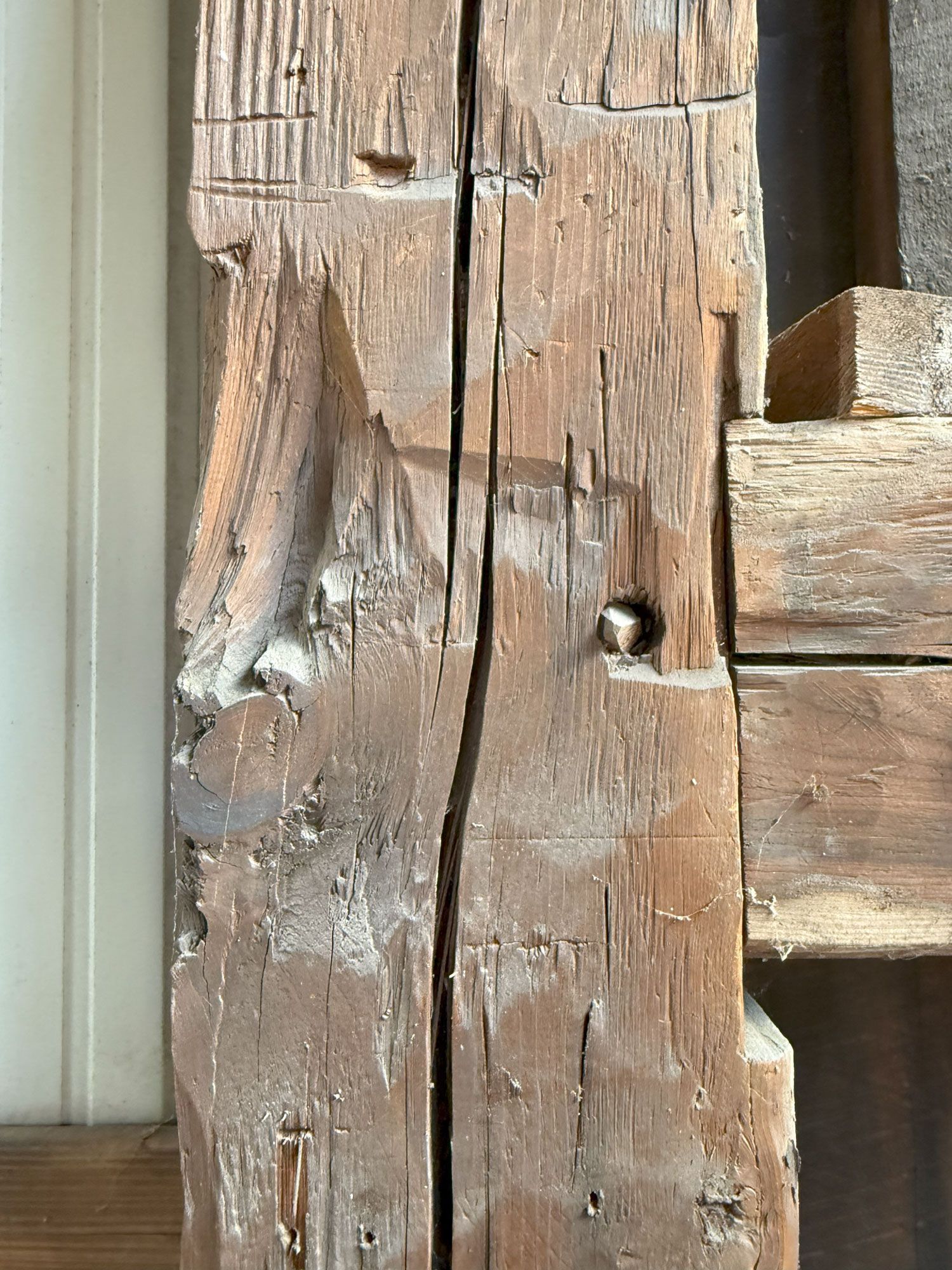
If you've ever walked into a timber frame home and noticed thin cracks running down the length of a beam, you've seen wood checking. It's one of the first things new timber frame owners ask us about, and it's usually followed by the same worried question: "Is my frame okay?"
Short answer: yes. Wood checking is normal. It's not a defect, and in almost every case, it won't hurt the strength of your frame.
Here at Bay & Bent, we've handled thousands of board feet of reclaimed and hand-hewn timber, and checking shows up on nearly every piece of solid wood we work with. Let us walk you through what's actually happening in that beam, and when a check is worth a second look.
So What Is Wood Checking, Exactly?
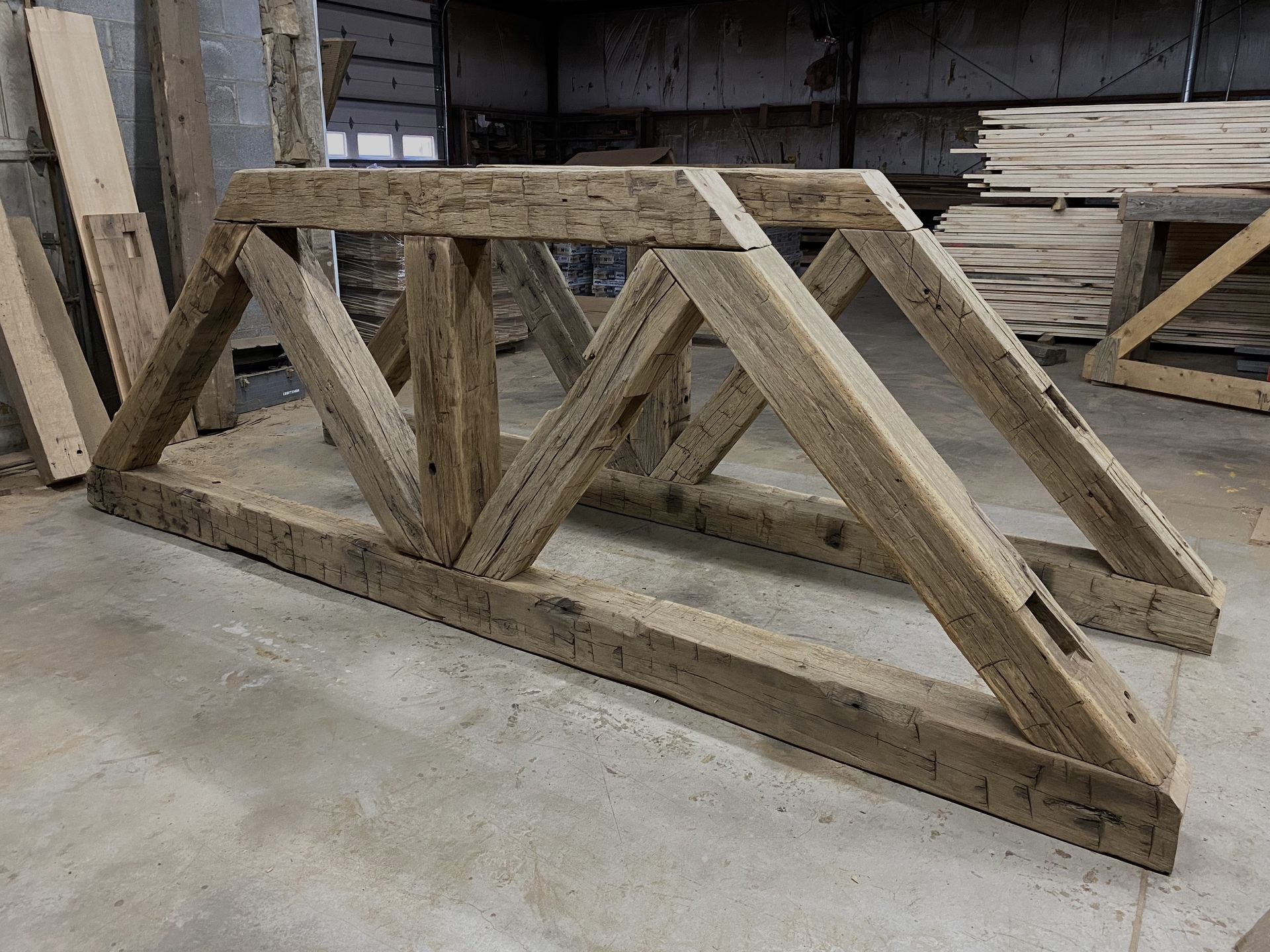
Wood checking is a crack that forms along the grain of a timber as it dries out. When a tree gets cut down and milled, the wood is loaded with moisture, sometimes close to half its total weight. As that timber dries and settles into its new environment, the water leaves the wood, and the fibers shrink.
Here's the catch: wood doesn't shrink evenly. The outer part of a beam dries out faster than the core, because it's the part exposed to air. That outer layer wants to shrink while the inner core is still holding onto moisture and staying put. That tug-of-war between the dry outside and the wet inside builds up tension, and the wood relieves that tension the only way it can, by splitting open along the grain. That's a check.
We tell our customers to think of it as a loaf of fresh bread pulled out of a hot oven. The crust cools and sets while the inside is still soft, and you get that crackling on the surface. Timber does something similar, just a lot slower.
Does Checking Mean Something's Wrong?
No, and this is the part that puts most people at ease. Checking is cosmetic in the vast majority of cases. It runs parallel to the grain, starts at the surface, and almost always stops well before it reaches the heart, or center, of the timber. It doesn't cut through the beam, and it doesn't take away from the timber's ability to carry a load.
In fact, plenty of timber framers will tell you checking is a good sign. It means you're looking at real, solid wood, not a manufactured beam wrapped to look like one. Every check is different, too. No two beams check the same way, which is part of why timber frames feel handmade in a way that drywall and steel never will.
There is one thing worth knowing the difference on: a split. A split is a crack that runs all the way through a timber, separating it into two pieces. That's different from a check, and it's the kind of thing that does need a builder's eye on it. If you're ever unsure whether what you're looking at is a check or something more serious, it's always worth getting a professional to take a look.
What Causes More or Less Checking
A few things affect how much a timber checks:
- Species. Some woods, like oak, tend to check more visibly than others because of how dense and tight the grain runs.
- Drying method. Air-dried and reclaimed timbers often check less dramatically than green wood that dries fast once it's inside a heated or air-conditioned building.
- How fast the environment changes. Cranking the heat or AC the moment a frame goes up is hard on timber. Slow, steady conditions let the wood dry out gradually and check less.
- Timber cut. Beams cut "free of heart center," meaning the pith or center of the tree isn't included, tend to check less than beams that include the full heart.
Caring for a Timber Frame with Checking
You don't need to do much. A few habits go a long way:
- Let your home's climate settle in gradually rather than blasting heat or AC right after move-in.
- Use a breathable, natural finish rather than a heavy film-forming poly, especially on wood that hasn't fully dried yet.
- Keep an eye on moisture content in your timbers, and don't let it climb back up over time.
- Reapply stain or sealer on a regular schedule, roughly every few years depending on exposure.
That's really it. Checking will happen on its own timeline, and there's no finish or trick that stops it completely, nor should there be. It's part of what makes the wood real.
Reclaimed Timber and Checking
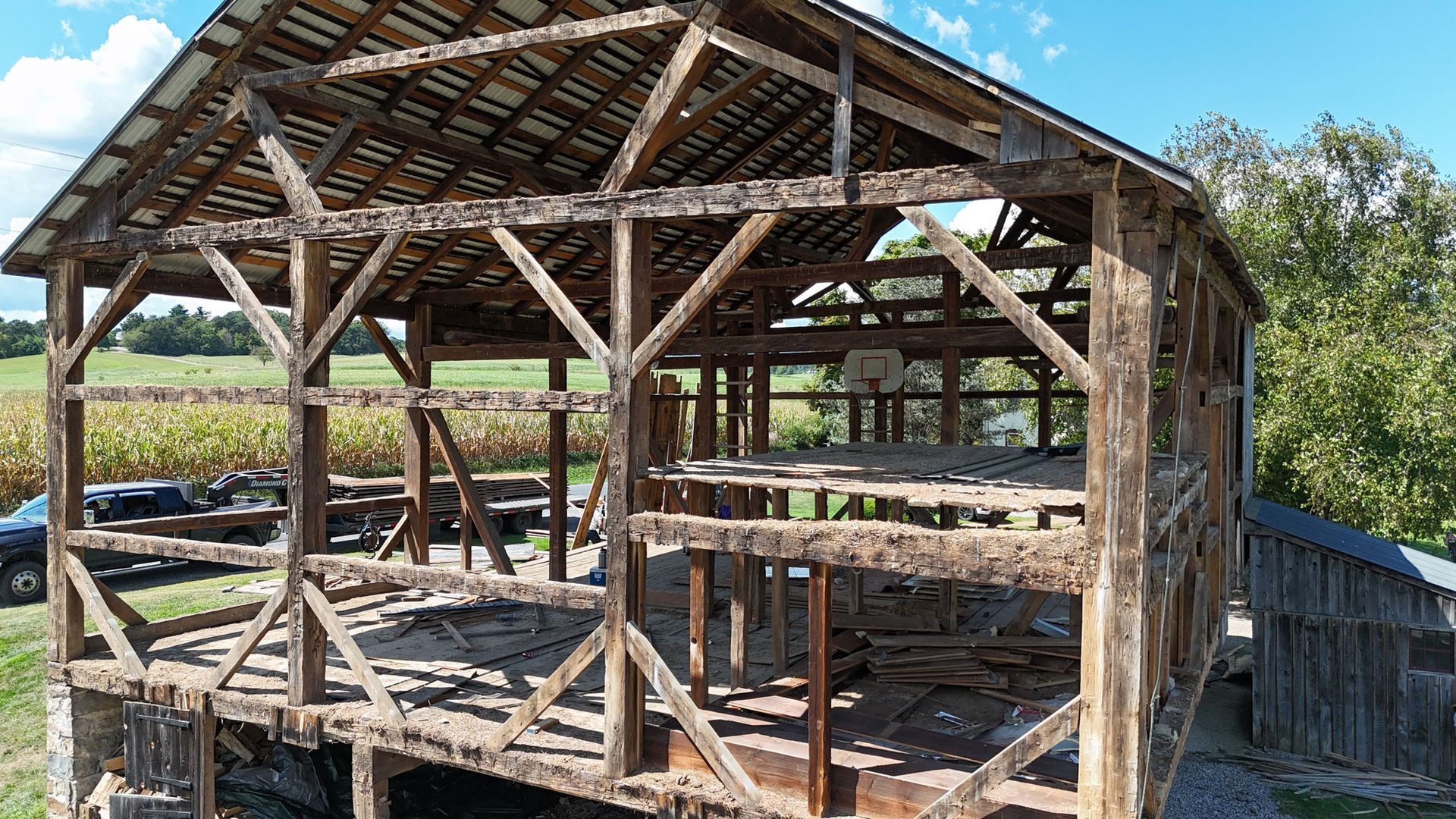
One thing we've noticed after years of sourcing reclaimed barn wood: older timber generally checks less than new-cut green wood, because it already went through its drying process decades ago, often over a century. That's one more reason we lean on reclaimed timber whenever we can. It's already settled into itself. The character is already there, the checking has already happened, and what you get is a beam that's proven it can hold up over generations.
If you're planning a build and want timber that's already stood the test of time, take a look at what we've got in stock at Bay & Bent. We source and hand-select reclaimed barn beams and antique timber from across Pennsylvania and beyond, so you're working with wood that's already done its shrinking and settling. If you're framing a full timber home or looking for a single mantel beam with real history in it, our team can help you find the right piece and talk through how it'll behave once it's in your build.
Frequently Asked Questions (FAQs)
Does wood checking weaken a timber frame?
No. Checking is a surface-level response to drying and doesn't compromise the structural strength of the timber in nearly all cases.
Can you stop wood from checking?
Not entirely, not in solid timber of any real size. You can reduce how much it checks with the right drying method and timber cut, but some checking should be expected.
Is checking covered under warranty?
Usually not, since it's considered a natural characteristic of solid wood rather than a defect. Check with your supplier on their specific policy.
Do checks let moisture or bugs into the timber?
Checks form as moisture leaves the wood, not as it enters, and they don't make a timber more vulnerable to insects on their own. Keeping your timber's moisture content in check is still your best defense.