Top 5 Reasons to Use Eco-Friendly Lumber in Design
Sustainable Wood for Smarter Design
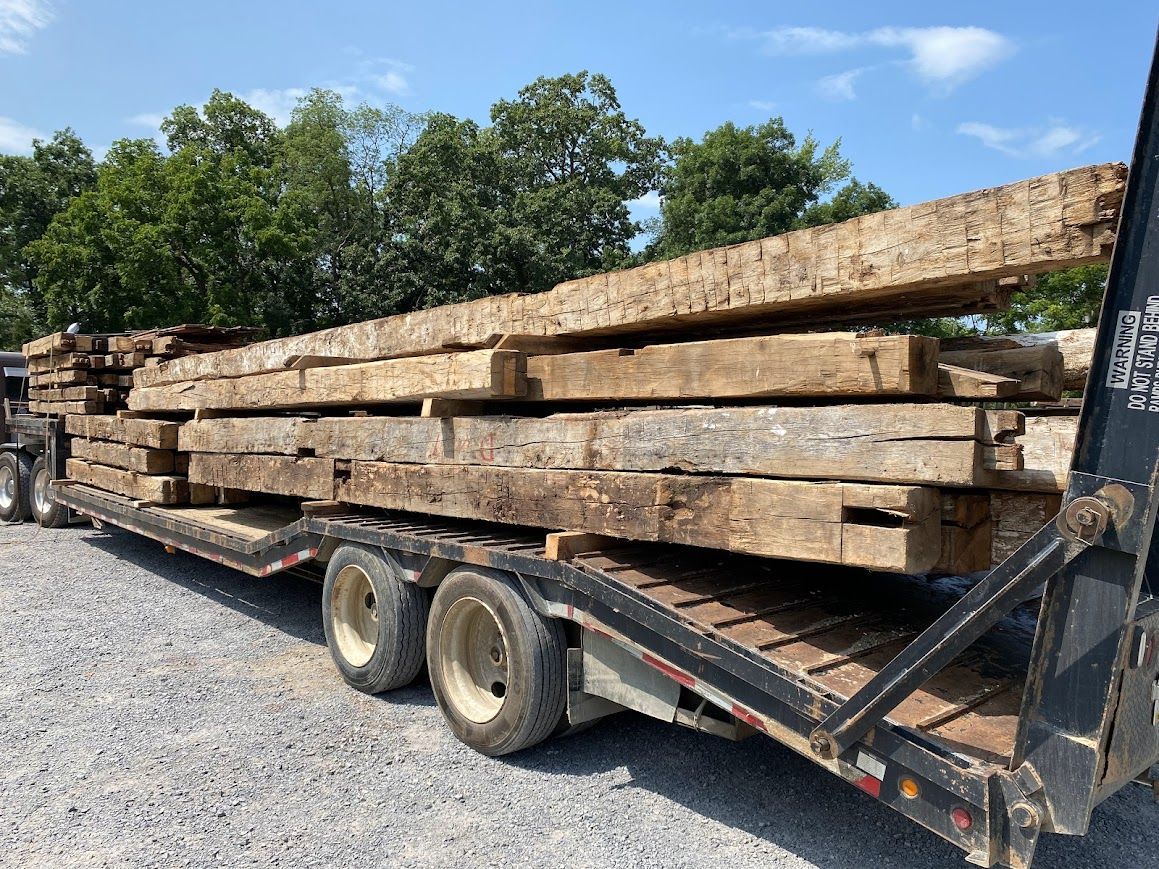
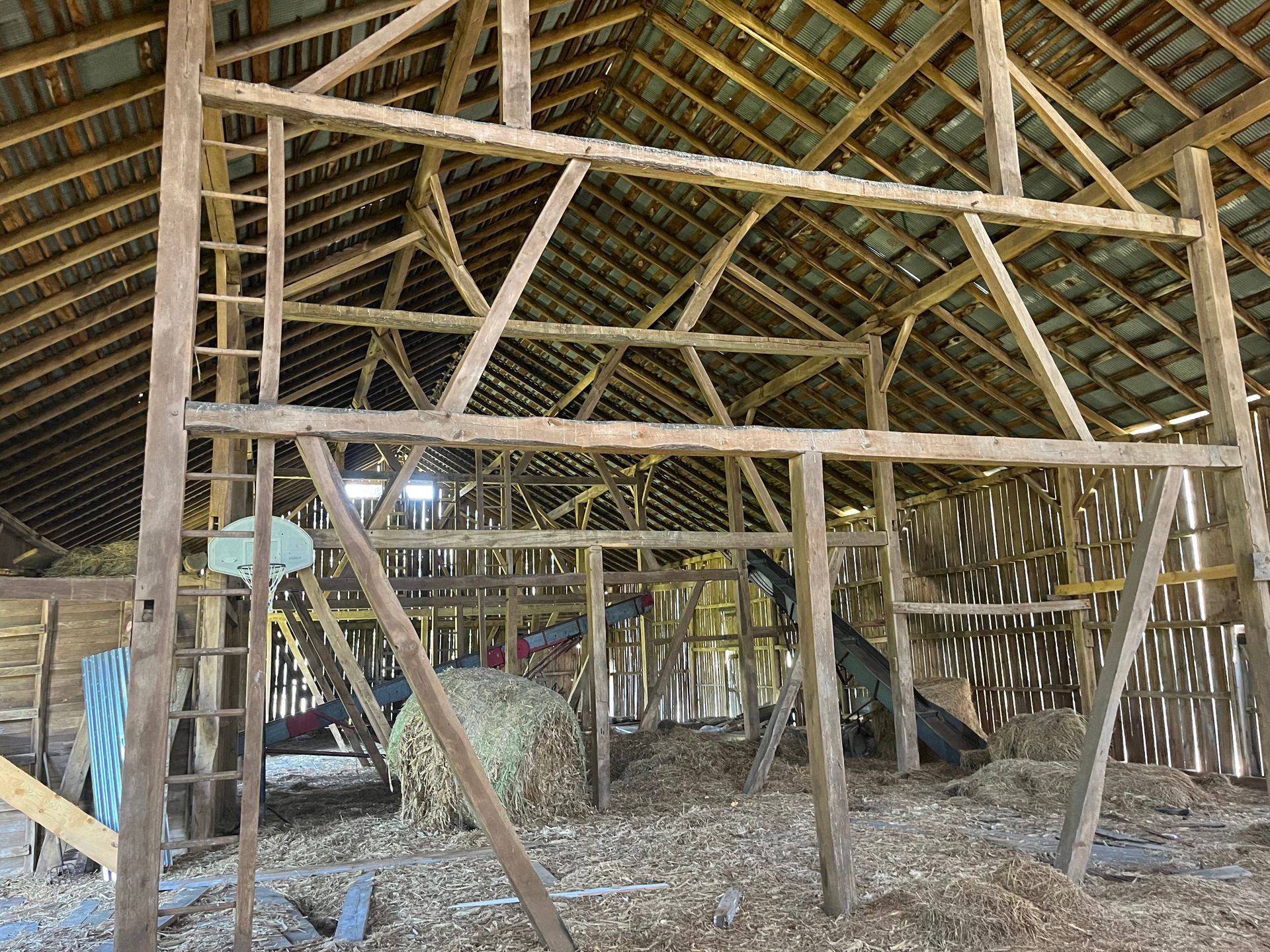
We've pulled timber out of barns that were standing before the Civil War. That wood is tighter-grained, harder, and more honest than most anything you'll find at a lumber yard today. Here's why choosing eco-friendly lumber, whether reclaimed or responsibly certified, is the smartest decision you can make for your next build.
Reasons to Use Eco-Friendly Lumber
Reason #: It Dramatically Reduces Your Carbon Footprint
Let me put it plainly: the way you build has a direct impact on the planet. Concrete and steel are the backbone of modern construction, but they come at a serious environmental cost. Wood, on the other hand, is a different story.
“Lower carbon footprint than concrete or steel. Wood has a carbon footprint roughly 75% smaller than common building materials like concrete or steel, and it can be a renewable, resource-efficient choice in design. - American Society of Landscape Architects (ASLA)”
But here's what makes eco-friendly lumber even more remarkable: wood doesn't just avoid carbon emissions, it actively stores carbon. As a tree grows, it absorbs CO₂ from the atmosphere and locks that carbon into its fibers. When that timber is used in a building, the carbon stays stored for as long as the structure stands. Studies show that a single cubic metre of wood can store roughly 0.9 tonnes of CO₂ equivalent, depending on the species and density.
With reclaimed timber, the kind we work with at Bay & Bent, that carbon has been locked in place for 150 years or more. You're not just building green; you're extending a carbon lock that's already been in place for generations. That's about as eco-friendly as lumber gets.
“‘The wood itself continues to act as a carbon store after the tree is felled and the timber is used in construction or the manufacture of furniture.’ - Creating Tomorrow's Forests, Sustainable Forestry Research”
Reason #2: Reclaimed and Certified Lumber Protects Our Forests
Here in Pennsylvania, we're lucky to be surrounded by some of the most beautiful hardwood forests in the country. But most of the world doesn't have the same protections we do. The international logging industry is still linked to deforestation, soil erosion, and wildlife loss.
The most trusted certifications to look for include:
- FSC — Forest Stewardship Council
- SFI — Sustainable Forestry Initiative
- ATFS — American Tree Farm System
- PEFC — Programme for Endorsement of Forest Certification
These organizations certify that lumber comes from forests where trees are harvested responsibly and replanted, ecosystems are protected, and biodiversity is maintained. The Sustainable SITES Initiative, a program developed to guide sustainable landscape design, specifically recommends using certified, sustainably harvested, and recycled wood to preserve forests that are critical for sequestering greenhouse gases.
When you shop for reclaimed or certified eco-friendly lumber, you reduce the demand for newly cut trees. It's simple math: less demand for virgin timber means less pressure on the world's forests. And when old buildings are torn down and that timber heads to a landfill instead of being reclaimed, it decomposes and releases the carbon it stored right back into the atmosphere. Reclaiming it keeps that carbon locked up and keeps useful material out of the waste stream.
Reason #3: Old-Growth Lumber Is Stronger Than New Wood
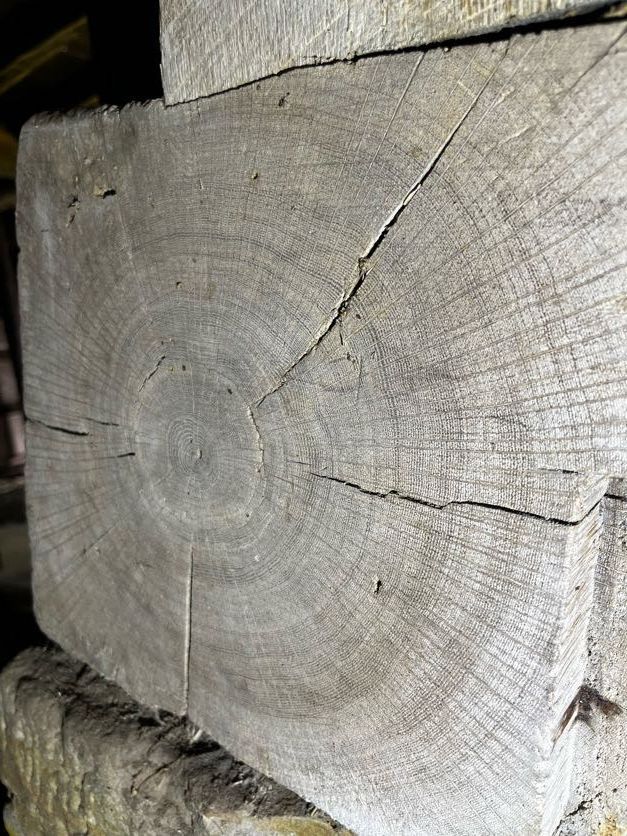
I want to talk about something that doesn't get enough attention: the sheer quality of the timber that came out of old-growth forests. When my team dismantles a barn that was built in 1820, we're looking at white oak, chestnut, and tulip poplar that grew slowly over hundreds of years in a dense, old-growth forest. Those trees produced tight annual rings, a sure sign of exceptionally hard, dense, durable wood.
New-growth timber, the kind that gets harvested from fast-rotation commercial forests, grows much faster. The rings are wider, the wood is less dense, and it simply doesn't have the same structural integrity. Old-growth timber, on the other hand, increases in strength and durability over time, which means it requires fewer chemical treatments and far less maintenance than new wood typically needs.
“‘Old-growth timber increases in strength and durability over time, which minimizes the number of treatments that new wood typically has to undergo.’ -Renewable Energy Magazine, Building Better (2024).”
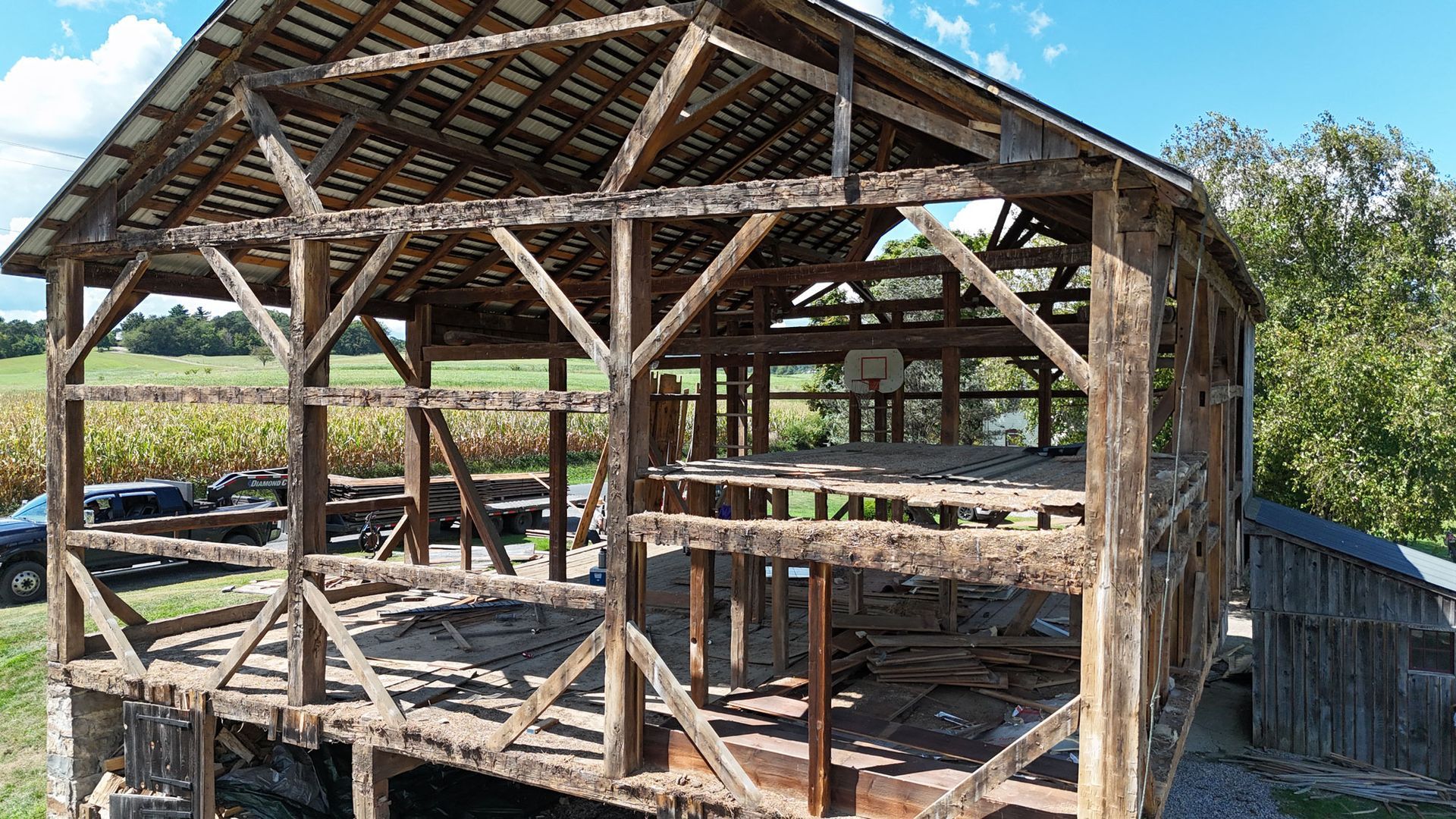
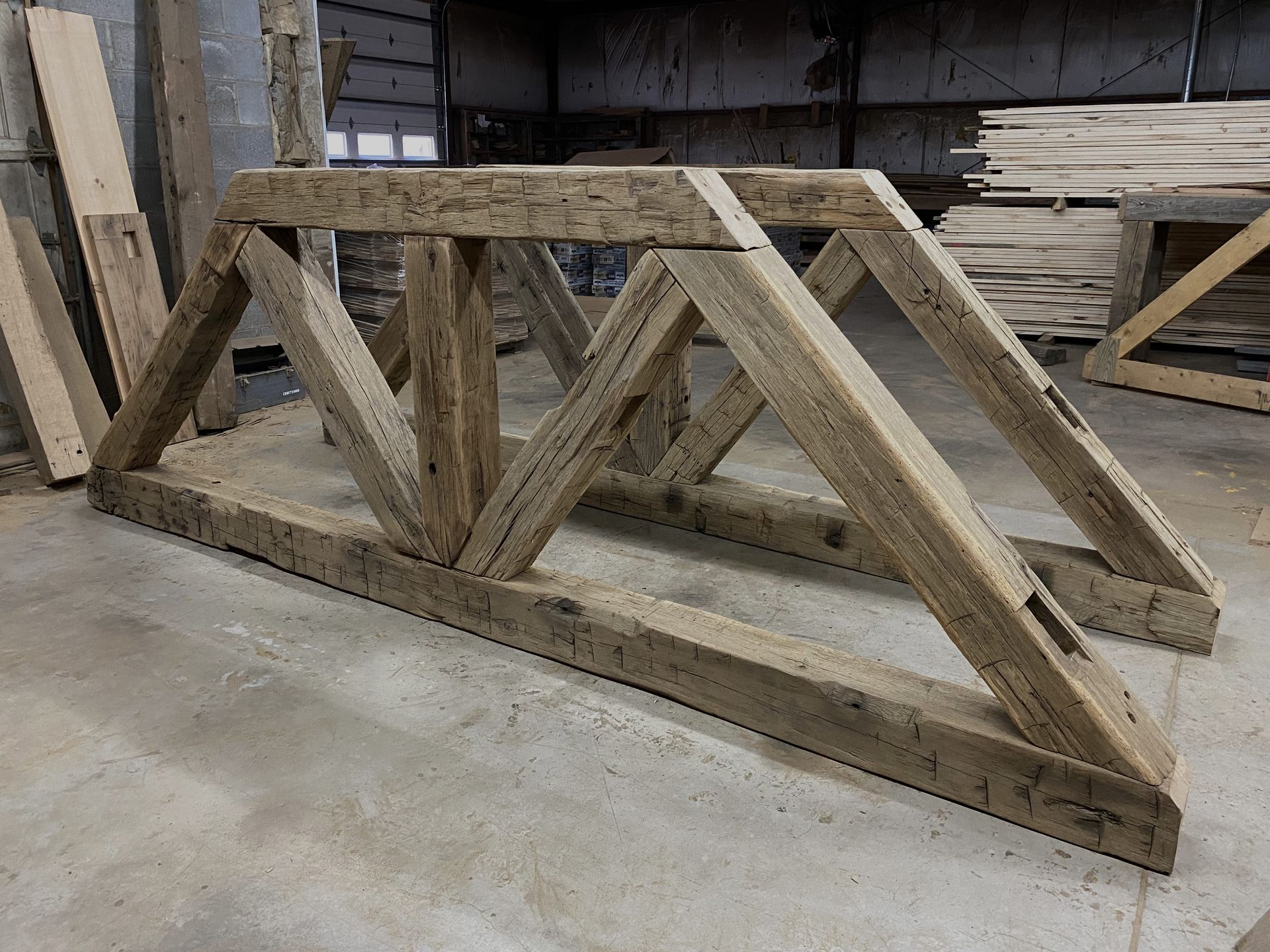
I've seen hand-hewn beams in our inventory that were cut by craftsmen nearly 200 years ago. They're still perfectly sound. They still carry load. They still have the mortise and tenon joinery that held a barn together through Pennsylvania winters for two centuries. You simply cannot replicate that with anything pulled off a shelf at a big box store today.
This is one of the great ironies of sustainable building: the most eco-friendly lumber is often also the most structurally superior. Reclaimed wood isn't a compromise; it's an upgrade.
Reason #4: It Reduces Construction Waste and Landfill Impact
Construction and demolition waste is a massive problem in this country. Every time a historic building gets knocked down, thousands of board-feet of perfectly usable timber get crushed and hauled to a landfill. That wood will eventually decompose, but here's what most people don't realize: when wood breaks down in a landfill, it doesn't just release CO₂. It also produces methane, a greenhouse gas far more potent than carbon dioxide over the short term.
Choosing eco-friendly lumber, particularly reclaimed timber, short-circuits this waste cycle entirely. Instead of sending 200-year-old oak to a landfill, that timber gets a second life as flooring, exposed beams, or structural framing in a new build. You reduce waste, preserve history, and encourage a cycle of sustainability that just makes sense.
There's also an energy argument here. Reclaimed wood has already been through the energy-intensive process of felling, milling, and drying. It doesn't need any of that again. In fact, conventional logging machinery alone generated over 40,000 tonnes of CO₂ to harvest just 8.9 million cubic metres of timber in one recent study. When you use reclaimed lumber, you skip all of that embedded energy cost. That's what's called lower "embodied energy," and it's a significant factor in any honest sustainability assessment of a building.
Roughly 90% of America's ancient forests have been harvested to support the demands of a growing population. Reclaimed lumber directly reduces the pressure to cut what remains.
Reason #5: Character to Any Design
I'll be straight with you: I'm a craftsman first. I care about the environment because I care about the land I live and work on. But I also care about beauty, and eco-friendly lumber, especially reclaimed timber, is flat-out beautiful in a way that new wood just isn't.
Every beam we salvage has a story written in its grain. You can see the adze marks left by the craftsman who hewed it. You can see the peg holes from the original joinery. The patina on old-growth timber takes on colors over decades that you simply cannot stain or paint onto new wood. It's warm. It's honest. It feels like it belongs on the earth because it grew from it over a very long time.
Architects and designers have caught on to this. Reclaimed and sustainably sourced eco-friendly lumber is increasingly specified in high-end residential and commercial projects, not just for its environmental credentials, but because it creates a sense of place and permanence that synthetic or fast-grown materials cannot match. When you walk into a room with exposed reclaimed beams, you feel it. There's a weight and warmth to it that changes how a space feels.
Beyond aesthetics, sustainable wood often commands a premium that pays back over time. It tends to have a longer lifespan, requires less maintenance, and can enhance a building's overall value. From a pure investment standpoint, choosing eco-friendly lumber is often the smarter long-term play.
Heritage Timber Specialists Since 1998
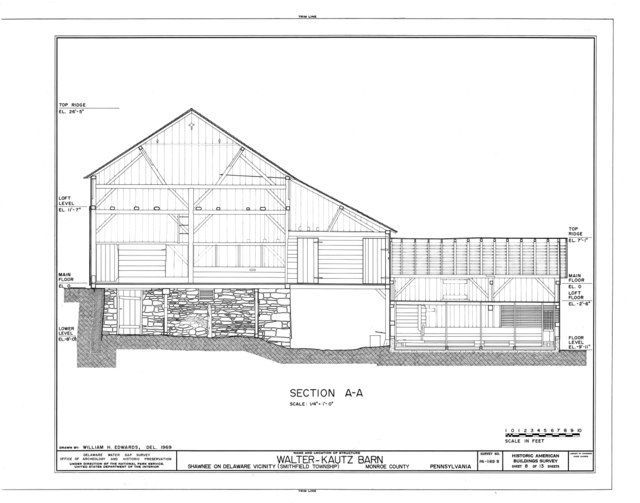
We started Bay & Bent because we couldn't stand watching incredible historic timber frames get demolished and discarded. Our team has carefully dismantled hundreds of pre-Civil War barns and structures since 1998. Many of those frames date back to the late 1700s and early 1800s, built from hand-hewn and sawn timber from old-growth forests that no longer exist.
We believe that preserving these structures is not just about maintaining buildings, it's about honoring the stories, the craftsmanship, and the environmental value locked inside them. Our partnership with Antique Building Solutions ensures that every piece of reclaimed timber we place meets the highest standards for quality and authenticity. If you're thinking about building with eco-friendly lumber, the real thing, from structures that have proven themselves over centuries, we'd love to talk.
The Bottom Line
We've spent decades in this trade. We've worked with all kinds of materials, and we keep coming back to the same conclusion: eco-friendly lumber, whether reclaimed from a historic barn or certified by the FSC from a responsibly managed forest, is better in just about every way that matters.
It's better for the climate, storing carbon instead of generating it. It's better for the forests that provide the air we breathe and the water we drink. It's stronger and more durable than the fast-grown stuff you'll find at most suppliers. It keeps useful material out of landfills. And it brings a character and beauty to a design that no factory-fresh board can replicate.
If you're planning a build, a home, a barn, a renovation, or a commercial project, we'd encourage you to look seriously at your lumber choices. Ask your supplier where the wood came from. Look for FSC or SFI certification. Better yet, ask about reclaimed timber. You might be surprised at what's available, and at how much of a difference it can make, for your building and for the planet.
That's what good craftsmanship looks like to me. Using materials that were made well, treated well, and built to last. Eco-friendly lumber isn't a trend. It's how we should have been building all along.